
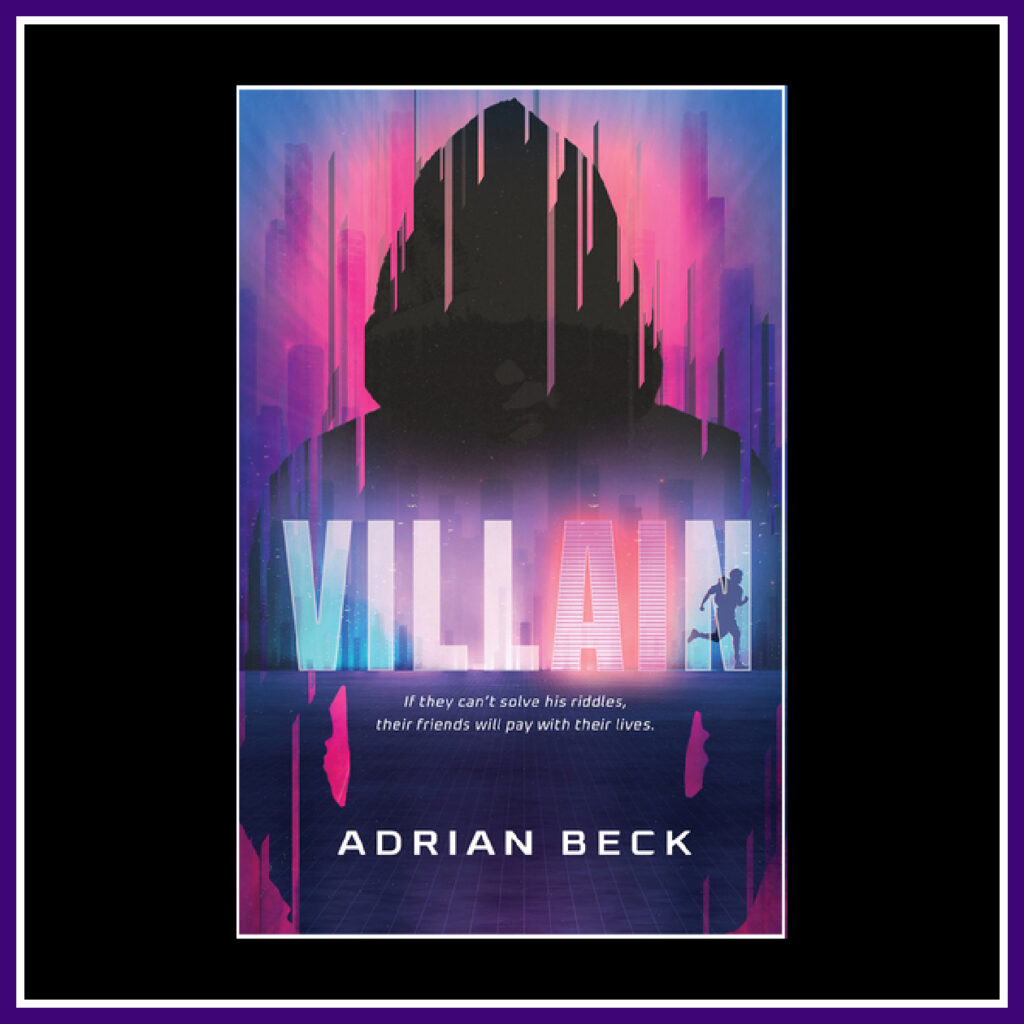
The most memorable stories are often the ones that compel readers to pause, reflect and question the world around them, drawing them deeper into the narrative for a fully immersive experience. Villain by Adrian Beck does just this, it is a high-tech thriller where Jay and Hudson must work together to solve cryptic challenges, or their class could be in grave danger. These riddles are timed, complex and require two boys, who would not by choice be in a team, to come together. They must rely on each other’s strengths to outsmart Z, their opponent, who knows every detail about them.
This story would make a fabulous read aloud driven by fast paced, high stake riddles and short chapters that each end on a gripping cliff hanger. Beck has created a storyline where AI is in control, setting the stage for an epic quest that pits humans against a machine.
Not only is this a tension fuelled plot that will have readers on the edge of their seats, but it is also a gateway to important conversations about digital footprints, the unseen forces shaping the information we consume and the importance of questioning and critically engaging with online material. We live in a world where digital literacy skills are essential and this story highlights in such a gripping way how seemingly easily AI can blur the line between what is real and fake. Beck seamlessly weaves in all sorts of techno-wizardry which highlights the ways AI can manipulate information, people’s actions and reshape situations.
This is the first book in the series and book 2, Villain: Respawn is out now.
I am delighted to see that there are not one, but two, book trailers for this adrenaline-charged clash between human resilience and creativity and artificial power. These trailers will pique readers interest and kudos to Beck for creating these. Both trailers can be viewed on the Scholastic website here.