
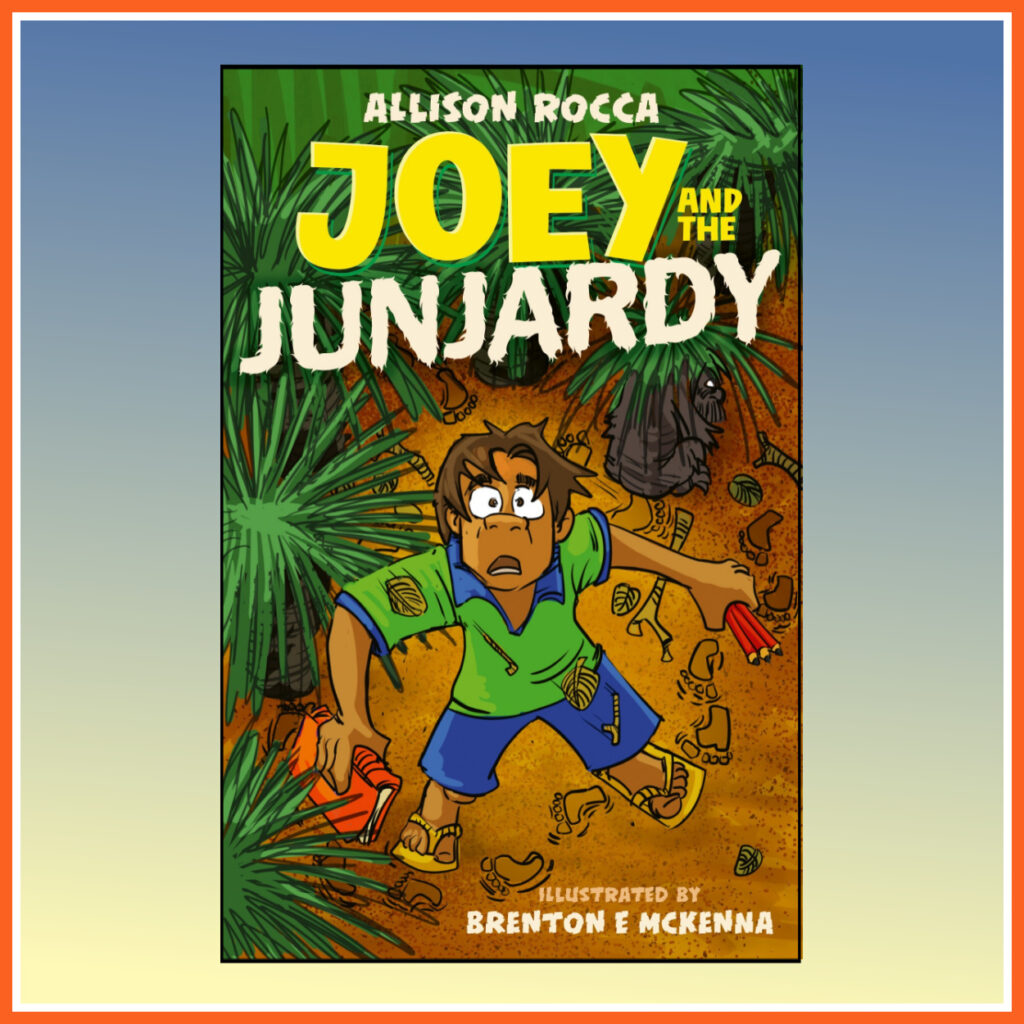
Allison Rocca, descendant of Wakka Wakka and Kaanju people and Brenton E McKenna a Yawuru artist, have created a rollicking middle grade story brimming with mischief and humour, while simultaneously exploring weightier themes of identity and belonging that give the narrative emotional depth. Joey and the Junjardy, published by UQP, follows eleven-year-old, Joey Gibbs on his journey to proudly embracing his First Nations culture and discovering the power of connecting to Country, culture and storytelling. Rocco was inspired by the Junjardy stories passed down to her from her grandparents and felt compelled to ensure they were preserved for future generations.
Joey and his family are often on the move due to his dad’s work. But their most recent move is different. After the shameful Big Trouble at his previous school, his family is hoping for a fresh start at Coolibah Creek, his mother’s Ancestral country, Wakka Wakka. Once again, Joey and his sister, Peggy, find themselves as the new kids at school, trying to make friends and find where they belong.
Determined to steer clear of trouble, Joey relishes the opportunity to create and draw in his much-loved sketch book. Yet trouble finds him in the form of a Junjardy, a small hairy trickster. The Junjardy delights in appearing unexpectedly and wreaking havoc with his tricks and pranks, causing all sorts of mayhem. At first, Joey appreciates having this trickster around. The Junjardy provides laughs and makes Joey’s days at school more bearable. However, the harmless pranks become more serious and dangerous. As the chaos spirals out of control, Joey finds himself blamed for a series of incidents, threatening the fresh start he was so determined to make.
Realising he needs help dealing with the Junjardy, Joey confides in Uncle Eddie. Uncle Eddie helps Joey learn that the Junjardy has chosen him for a reason. Rather than simply being a mischievous trickster, the Junjardy is challenging Joey to connect with culture, discover the truth about himself and confront the doubts and fears he harbours that are holding him back. As Joey courageously and honestly considers this, he powerfully embraces who he is. He frees himself from the cloud of mistaken identity that has plagued him and the reader learns that many of the situations Joey faces are the result of others prejudices and preconceived judgements, rather than Joey’s actions.
This story ticks all the boxes for an excellent read aloud with plenty of scope for class discussions. Rocca and Mc Kenna have done a brilliant job at positioning the reader to walk in the shoes of Joey. This story holds up a mirror to middle grade readers who may be navigating change, whether it is a new school, or an unfamiliar situation and finding their place. For readers who have a different lived experience to Joey it serves as a window into the racism and exclusion he experiences.
Comprehensive teachers’ notes are avaialbe from the UQP website here.